Introduction
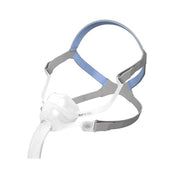
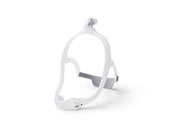
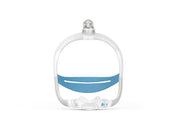
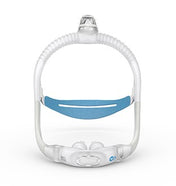
A nasal pillow CPAP mask and a full face CPAP mask sit at opposite ends of the CPAP mask coverage spectrum, and the gap between them is larger than between any other two CPAP mask categories. A nasal pillow CPAP mask — such as the ResMed AirFit P10 — contacts the face only at the nostrils, with minimal headgear and no coverage of the cheeks, nose bridge, or mouth at all. A full face CPAP mask — such as the ResMed AirFit F20 — seals over both the nose and mouth, covering a substantially larger portion of the face to accommodate any breathing pattern.
Because these two CPAP mask types represent such different design philosophies, the decision between them tends to be driven by one clinical question above all else: how does the patient breathe during sleep. This page compares nasal pillow CPAP masks and full face CPAP masks across coverage, comfort, pressure tolerance, and daily use, to help you understand which CPAP mask category is the right starting point for your therapy. As always, consult your healthcare provider or sleep specialist regarding your specific CPAP mask needs.

Quick Comparison Overview
| Feature | Nasal Pillow CPAP Mask | Full Face CPAP Mask |
|---|---|---|
| Coverage Area | Nostrils only | Nose and mouth |
| Suitable for Mouth Breathers | No | Yes |
| Suitable for Nasal Congestion | Not ideal during congestion | Functions even with nasal congestion |
| Face Contact | Minimal — nostrils and light headgear only | Extensive — nose, cheeks, and chin area |
| Weight | Lightest CPAP mask category available | Heaviest CPAP mask category |
| Field of View | Fully unobstructed | More restricted by larger frame |
| Glasses-Friendly | Yes — minimal frame near eyes | Often more difficult with glasses |
| Claustrophobia-Friendly | Highest of all CPAP mask types | Can feel confining for some patients |
| Pressure Tolerance | Can feel concentrated at the nostril at higher pressures | Often tolerated well at higher pressures |
| Headgear | Minimal, auto-adjusting elastic | Structured, multi-point support |
| Assembly and Cleaning | Fastest — fewest components | More involved — larger cushion and frame |
| Risk of Facial Marks | Lowest of all CPAP mask types | Somewhat higher, particularly early in therapy |
| Typically Recommended For | Confirmed, consistent nasal breathers | Mouth breathers or uncertain breathing pattern |
Both CPAP mask types use clinically validated sealing technology and are compatible with the full range of auto-adjusting and standard CPAP machines. The decision between them comes down almost entirely to breathing pattern and personal tolerance for facial coverage, rather than any difference in core therapy delivery.
The Single Most Important Factor: How You Breathe
As with any nasal-only CPAP mask, the most important question to answer before choosing a nasal pillow CPAP mask is whether you breathe consistently through your nose during sleep. A nasal pillow CPAP mask seals only at the nostrils, with no coverage of the mouth whatsoever — if air escapes from an open mouth during the night, the mask cannot compensate, and therapy effectiveness drops immediately.
A full face CPAP mask removes this uncertainty entirely by sealing over both the nose and mouth. It will deliver effective therapy whether the patient breathes nasally, orally, or switches between the two throughout the night — which is precisely why it is often the recommended starting point for patients who are unsure of their breathing pattern, or who have a known history of mouth breathing.
Coverage and Face Contact: The Two Extremes
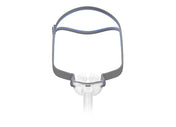
Of all the CPAP mask categories, nasal pillow and full face masks represent the widest possible gap in facial coverage. A nasal pillow CPAP mask, such as the ResMed AirFit P10, uses small dual-wall cushions that insert just inside the nostrils, with no cushion on the nose bridge, no contact with the cheeks, and headgear so minimal it is often described as barely noticeable. This makes it the lightest and least intrusive CPAP mask available, and a common choice for patients who simply want to feel as little equipment as possible while they sleep.
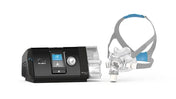
A full face CPAP mask, such as the ResMed AirFit F20, sits at the opposite end of the spectrum. Its InfinitySeal cushion seals from the bridge of the nose down past the mouth to the area below the chin, supported by a more structured frame and plush headgear designed to maintain that broader seal throughout the night. This is the largest coverage area of any CPAP mask type, necessary to accommodate both nasal and oral airflow within a single device.
This contrast in coverage is also why patients sometimes describe the choice between a nasal pillow CPAP mask and a full face CPAP mask as choosing between two almost entirely different experiences of wearing a mask — one nearly weightless and barely felt, the other more substantial but far more versatile in terms of breathing pattern.
Comfort, Claustrophobia, and Pressure Tolerance
For patients who feel claustrophobic in CPAP masks generally, a nasal pillow CPAP mask is typically the most comfortable option available, since there is no frame across the cheeks or coverage of the mouth to create a sense of confinement. Patients who wear glasses also tend to find nasal pillow CPAP masks easier to manage before sleep, since the minimal frame does not interfere with where glasses normally sit.
Full face CPAP masks, by contrast, cover considerably more of the face and can feel more confining to patients who are sensitive to facial coverage — though many patients adapt to this within the first few nights and find a properly fitted full face CPAP mask entirely comfortable. The trade-off is that full face CPAP masks are often better tolerated at higher prescribed pressures, since the larger sealing surface distributes airflow sensation more evenly rather than concentrating it at the nostril opening, as can happen with a nasal pillow CPAP mask at elevated pressure settings.
Facial marks are another consideration. Because a nasal pillow CPAP mask has so little contact with the face, it rarely leaves marks or pressure points. A full face CPAP mask, due to its larger contact area and the headgear tension required to maintain a broader seal, is somewhat more likely to leave temporary marks on the nose bridge, cheeks, or chin — particularly while a patient is still adjusting to therapy or fine-tuning headgear tension.
Headgear, Assembly, and Daily Use
Nasal pillow CPAP masks use the simplest headgear and assembly of any CPAP mask category. The AirFit P10's QuickFit headgear is a single auto-adjusting elastic piece, and the entire mask is typically constructed from just three parts — frame, cushion, and headgear — making it the fastest CPAP mask to put on, remove, and clean each day.
Full face CPAP masks involve more structure by necessity. The AirFit F20 uses plush, multi-point headgear secured with magnetic clips, along with a quick-release elbow that allows the patient to disconnect from the CPAP tubing without removing the mask entirely — useful for getting up during the night without disturbing the seal. While not significantly more time-consuming to manage day to day, a full face CPAP mask does involve a few more components and a slightly more deliberate fitting process than a nasal pillow CPAP mask.
Which CPAP Mask Type May Suit You
A nasal pillow CPAP mask may be the right starting point if you:
- Breathe consistently through your nose, confirmed by yourself or a bed partner
- Want the lightest possible CPAP mask with virtually no facial coverage
- Feel claustrophobic in masks that cover the cheeks or mouth
- Wear glasses and want a completely unobstructed fit
- Are prescribed a low to moderate therapy pressure
- Prioritize the fastest, simplest daily assembly and cleaning routine
A full face CPAP mask may be the right starting point if you:
- Breathe through your mouth, habitually or occasionally, during sleep
- Are unsure of your breathing pattern and want a CPAP mask that works regardless
- Experience frequent nasal congestion, allergies, or a deviated septum
- Have tried a nasal pillow CPAP mask and experienced recurring leaks or dry mouth in the morning
- Are prescribed a higher therapy pressure and want a broader, more evenly distributed seal
Explore Specific CPAP Mask Comparisons
If you want to compare specific CPAP mask models within or across these categories, the following comparisons may help:
Frequently Asked Questions
How do I know if I need a nasal pillow CPAP mask or a full face CPAP mask?
The most important factor is how you breathe during sleep. If you breathe consistently through your nose, a nasal pillow CPAP mask is typically a comfortable, lightweight option to try. If you breathe through your mouth, habitually or due to congestion, a full face CPAP mask is generally recommended, since a nasal pillow CPAP mask cannot compensate for air escaping from an open mouth. If you are unsure, ask a bed partner or discuss the decision with your healthcare provider.
Can I use a nasal pillow CPAP mask if I sometimes wake up with a dry mouth?
Waking up with a dry mouth while using a nasal pillow CPAP mask is a common sign that air is escaping from the mouth during the night, which means the seal is not being maintained as intended. This typically indicates some degree of mouth breathing is occurring. Patients in this situation often benefit from either switching to a full face CPAP mask or pairing their nasal pillow CPAP mask with a chin strap to help keep the mouth closed. Discuss persistent dry mouth with your healthcare provider, as it can affect therapy effectiveness.
Which CPAP mask is more comfortable, a nasal pillow or a full face mask?
This depends heavily on individual preference and facial structure. A nasal pillow CPAP mask is generally the lightest and least intrusive option, which many patients find more comfortable simply due to minimal contact. However, some patients find the broader, more evenly distributed seal of a full face CPAP mask more secure and reassuring, particularly at higher therapy pressures. There is no universally more comfortable option between these two CPAP mask types — both are widely used and well tolerated by different patients.
Is a nasal pillow CPAP mask uncomfortable for everyone at higher pressures?
No, but some patients find the airflow sensation more concentrated and noticeable at the nostril opening when using a nasal pillow CPAP mask at higher prescribed pressures, since the entire pressure load is delivered through two small pillow cushions rather than distributed across a broader seal. Many patients tolerate nasal pillow CPAP masks comfortably at higher pressures, particularly when paired with a gradual ramp setting. If discomfort persists at your prescribed pressure, a full face CPAP mask may distribute that sensation more comfortably.
Can I switch between a nasal pillow CPAP mask and a full face CPAP mask without changing my machine?
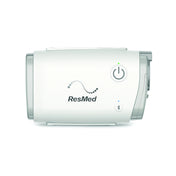
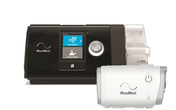
In most cases, yes. Standard CPAP machines use a universal hose connection compatible with the vast majority of nasal pillow CPAP masks and full face CPAP masks on the market. Some integrated travel CPAP systems, such as the ResMed AirMini, require a specific setup pack matched to the mask interface chosen, so compatibility should be confirmed for those systems specifically. For most home CPAP machines, switching between CPAP mask categories requires no other equipment changes.
Why would someone choose a nasal pillow CPAP mask over a full face mask if it covers less of the face?
Patients who are confirmed nasal breathers often prefer a nasal pillow CPAP mask specifically because it covers less of the face. The minimal contact reduces the sensation of wearing equipment during sleep, avoids interference with glasses, leaves the field of view completely open, and is generally the lightest and quickest CPAP mask to assemble and clean. For patients whose breathing pattern supports it, the reduced coverage is viewed as an advantage rather than a limitation.
Are nasal pillow CPAP masks suitable for nasal congestion or allergies?
Not ideally. A nasal pillow CPAP mask relies entirely on clear nasal airflow to function, since it seals directly at the nostril opening with no alternative breathing pathway. Patients who experience frequent nasal congestion, seasonal allergies, or other conditions that block nasal breathing periodically often find a full face CPAP mask more reliable, since it continues to function even when nasal airflow is restricted. Persistent congestion should also be discussed with your healthcare provider, as it may be a treatable condition on its own.
Need Help Choosing the Right CPAP Mask?
If you are unsure whether a nasal pillow CPAP mask or a full face CPAP mask is the right starting point for your therapy, our team is here to help. We can walk through your breathing pattern, prescribed pressure, and comfort preferences to help you find the right CPAP mask.
CPAP Machines Canada
Website: cpapmachinescanada.ca
Toll Free: +1 (877) 820-4878
Email: support@cpapmachinescanada.ca