Introduction
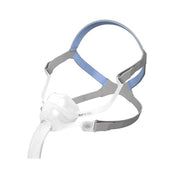
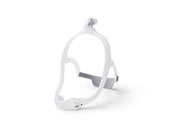
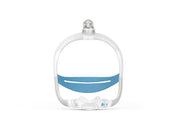
Choosing between a nasal CPAP mask and a full face CPAP mask is one of the most fundamental decisions a sleep apnea patient makes, and it is often the question that determines therapy success or struggle. A nasal CPAP mask — such as the ResMed AirFit N20, AirTouch N20, or Fisher and Paykel Nova Nasal — covers and seals around the outside of the nose only. A full face CPAP mask — such as the ResMed AirFit F20 — seals over both the nose and the mouth, delivering therapy regardless of how the patient breathes during sleep.
The two categories of CPAP mask are not simply a matter of size or coverage preference. The right choice depends heavily on a clinical factor: whether the patient breathes through their nose, their mouth, or a combination of both during sleep. This page compares nasal CPAP masks and full face CPAP masks across coverage, comfort, pressure tolerance, and suitability, to help you understand which category of CPAP mask is likely to be the right starting point. As always, consult your healthcare provider or sleep specialist regarding your specific CPAP mask and therapy needs.

Quick Comparison Overview
| Feature | Nasal CPAP Mask | Full Face CPAP Mask |
|---|---|---|
| Coverage Area | Nose only | Nose and mouth |
| Suitable for Mouth Breathers | No | Yes |
| Suitable for Nasal Congestion | Not ideal during congestion | Functions even with nasal congestion |
| Face Contact | Moderate — nose bridge and sides of nose | Extensive — nose, cheeks, and chin area |
| Field of View | Mostly unobstructed | More restricted by larger frame |
| Glasses-Friendly | Generally yes | Often more difficult with glasses |
| Claustrophobia-Friendly | Generally more comfortable | Can feel more confining for some patients |
| Pressure Tolerance | Can feel concentrated at higher pressures | Often tolerated well at higher pressures |
| Weight | Lighter, smaller frame | Heavier, larger frame |
| Headgear | Simpler, fewer adjustment points | More structured, multi-point support |
| Risk of Facial Marks | Lower | Somewhat higher, particularly when new to therapy |
| Typically Recommended For | Confirmed consistent nasal breathers | Mouth breathers or uncertain breathing pattern |
Both categories of CPAP mask use clinically validated sealing technology and are compatible with the full range of auto-adjusting and standard CPAP machines. The decision between them is primarily about how a patient breathes during sleep, not about therapy quality or pressure delivery capability.
The Single Most Important Factor: How You Breathe
Before comparing comfort or fit, there is one clinical question that should guide the choice of CPAP mask above all others: do you breathe through your nose, your mouth, or both during sleep? This single factor determines which CPAP mask category will actually deliver effective therapy.
A nasal CPAP mask relies entirely on the user breathing through their nose. If air escapes from an open mouth during the night — whether from habitual mouth breathing, nasal congestion, or the sensation of CPAP pressure itself causing the jaw to drop — a nasal mask cannot compensate. The result is air leaking from the mouth, reduced therapy pressure reaching the airway, and a noisy, less effective night of therapy.
A full face CPAP mask seals over both the nose and mouth, so it continues to deliver therapy effectively no matter which way the patient breathes. This makes it the safer default for patients who are unsure of their breathing pattern, who have a history of mouth breathing, or who experience seasonal allergies or congestion that periodically blocks nasal airflow.
Coverage and Face Contact
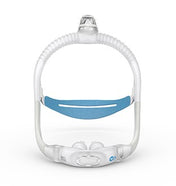
A nasal CPAP mask, such as the ResMed AirFit N20, seals around the outside of the nose — contacting the nose bridge, the sides of the nose, and the area just above the upper lip. This is a moderate amount of facial coverage compared to other CPAP mask types, distributed over a relatively small surface area centred on the nose.
A full face CPAP mask, such as the ResMed AirFit F20, covers significantly more of the face — sealing from the bridge of the nose down past the mouth to below the chin. This larger coverage area is necessary to accommodate both nasal and oral breathing within a single seal, and it naturally means more skin contact, a larger frame, and more structured headgear to keep everything secure throughout the night.
Patients who are sensitive to facial coverage, who wear glasses before bed, or who simply prefer the lightest possible CPAP mask tend to gravitate toward nasal masks when their breathing pattern allows it. Patients who need the security of full nasal and oral coverage, or who have struggled with leaks using a nasal mask, often find a full face CPAP mask solves the problem even though it covers more of the face.
Comfort, Pressure Tolerance, and Therapy Considerations
Therapy pressure can influence how comfortable each CPAP mask category feels in practice. Nasal CPAP masks distribute the prescribed pressure across the nasal cushion, which most patients tolerate comfortably at low to moderate pressures. At higher prescribed pressures, some nasal CPAP mask users find the sensation more noticeable, particularly if nasal congestion or anatomy makes consistent airflow more difficult.
Full face CPAP masks are often better tolerated at higher prescribed pressures because the larger sealing surface and dual breathing pathway reduce the likelihood of the patient needing to compensate by opening their mouth — which, with a nasal-only mask, would cause a leak. For patients on higher pressure prescriptions who have experienced discomfort or inconsistent sealing with a nasal CPAP mask, a full face CPAP mask is frequently the next mask type explored with their care provider.
Some patients also experience facial marks or pressure points after wearing a full face CPAP mask, particularly during the early weeks of therapy or if headgear tension is not yet properly adjusted. This is less common with nasal CPAP masks, which have a smaller contact area and generally lighter overall weight on the face.
Headgear, Weight, and Daily Use
Nasal CPAP masks are generally lighter and use simpler headgear systems than full face CPAP masks, owing to their smaller frame and reduced sealing surface. Many modern nasal CPAP masks, including the AirFit N20 and the Nova Nasal, use streamlined fit systems — magnetic clips or pivoting headgear — designed to be put on quickly without a strict fitting protocol.
Full face CPAP masks require a more structured headgear system to keep a larger cushion stable across a wider sealing area throughout the night. The AirFit F20, for example, uses plush headgear with magnetic clips and a quick-release elbow that allows the patient to disconnect from the CPAP tubing without removing the mask — a convenience feature that reflects the slightly more involved nature of wearing and managing a full face CPAP mask night to night.
In terms of daily cleaning, both CPAP mask categories require similar routines — daily wiping or washing of the cushion, and regular replacement of components on a schedule recommended by Health Canada. The larger surface area of a full face CPAP mask means slightly more material to clean each day compared to a nasal CPAP mask, though neither routine is particularly time-consuming.
Which CPAP Mask Type May Suit You
A nasal CPAP mask may be the right starting point if you:
- Consistently breathe through your nose throughout the night, confirmed by yourself or a bed partner
- Do not experience chronic nasal congestion or allergies that block airflow regularly
- Prefer the lightest possible CPAP mask with the least facial coverage
- Wear glasses before bed and want minimal frame interference
- Are prescribed a low to moderate therapy pressure
A full face CPAP mask may be the right starting point if you:
- Breathe through your mouth, habitually or occasionally, during sleep
- Are unsure of your breathing pattern and want a CPAP mask that works either way
- Experience frequent nasal congestion, allergies, or a deviated septum
- Have tried a nasal CPAP mask and experienced recurring leaks from the mouth
- Are prescribed a higher therapy pressure and want the broader sealing surface of a full face design
Explore Specific CPAP Mask Comparisons
If you want to compare specific CPAP mask models within or across these categories, the following comparisons may help:
Frequently Asked Questions
How do I know if I need a nasal CPAP mask or a full face CPAP mask?
The most important factor is how you breathe during sleep. If you breathe consistently through your nose, a nasal CPAP mask is typically the first option to try. If you breathe through your mouth, habitually or due to congestion, a full face CPAP mask is generally recommended, since a nasal CPAP mask cannot compensate for air escaping from the mouth. If you are unsure of your breathing pattern, ask a bed partner or discuss the decision with your healthcare provider.
Can I use a nasal CPAP mask if I occasionally breathe through my mouth?
If mouth breathing occurs even occasionally during CPAP therapy, a nasal CPAP mask will allow air to leak from the mouth during those periods, reducing therapy pressure and effectiveness. Some patients address this by combining a nasal CPAP mask with a chin strap, which helps keep the mouth closed during sleep. However, a full face CPAP mask is often a more reliable solution for patients who experience any regular mouth breathing, since it removes the issue entirely rather than relying on an additional accessory.
Is a full face CPAP mask less comfortable than a nasal CPAP mask?
Not necessarily. Comfort depends heavily on the individual patient, the specific mask model, headgear adjustment, and how well the mask fits the patient's face. Many patients find full face CPAP masks entirely comfortable once properly fitted, despite the larger coverage area. The perception that full face CPAP masks are inherently less comfortable than nasal CPAP masks is common but not universally true — fit and proper adjustment matter more than the category itself in most cases.
Will switching from a nasal CPAP mask to a full face CPAP mask affect my therapy pressure?
Switching CPAP mask types can sometimes affect how a patient experiences their prescribed pressure, since full face and nasal CPAP masks distribute airflow differently. Some patients find pressure feels more comfortable with one mask type than another even at the same prescribed setting. If you switch CPAP mask categories, monitor your comfort and therapy data over the following days, and consult your healthcare provider if you notice a significant change in comfort or therapy effectiveness.
Can I use the same CPAP machine with either a nasal CPAP mask or a full face CPAP mask?
In most cases, yes. Standard CPAP machines use a universal hose connection compatible with the vast majority of nasal CPAP masks and full face CPAP masks on the market. Some integrated travel CPAP systems, such as the ResMed AirMini, require a specific setup pack matched to the mask interface chosen, so compatibility should be confirmed for those systems specifically. For most home CPAP machines, switching between a nasal CPAP mask and a full face CPAP mask requires no other equipment changes.
Why do some patients start with a full face CPAP mask even if they are not sure they breathe through their mouth?
Starting with a full face CPAP mask removes the uncertainty around breathing pattern altogether, since it works effectively regardless of whether the patient breathes through the nose, the mouth, or both. Some patients and care providers prefer this approach during the early weeks of therapy while the patient's breathing habits during sleep are still being observed, before transitioning to a lighter nasal CPAP mask once nasal breathing is confirmed.
Does nasal congestion mean I always need a full face CPAP mask?
Not necessarily, but chronic or frequent nasal congestion is one of the more common reasons patients move from a nasal CPAP mask to a full face CPAP mask. If congestion is occasional, such as during a seasonal cold, some patients keep both a nasal CPAP mask and a full face CPAP mask on hand and switch as needed. If congestion is persistent due to allergies or a structural issue such as a deviated septum, a full face CPAP mask is often the more reliable long-term solution. Discuss persistent congestion with your healthcare provider, as it may also be a treatable condition on its own.
Need Help Choosing the Right CPAP Mask?
If you are unsure whether a nasal CPAP mask or a full face CPAP mask is the right starting point for your therapy, our team is here to help. We can walk through your breathing pattern, prescribed pressure, and comfort preferences to help you find the right CPAP mask.
CPAP Machines Canada
Website: cpapmachinescanada.ca
Toll Free: +1 (877) 820-4878
Email: support@cpapmachinescanada.ca