Introduction
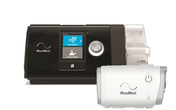
Two of the most frequently compared home CPAP machines in Canada are the ResMed AirSense 10 AutoSet and the Philips DreamStation 2 Auto CPAP Advanced. Both are full-featured auto-adjusting machines from established global manufacturers, both include integrated heated humidifiers and heated tubing, and both are backed by three-year warranties. They occupy a similar space in the home CPAP market, yet each reflects its manufacturer's distinct priorities in terms of comfort features, interface design, filter systems, ramp functionality, and data connectivity.
For patients starting CPAP therapy or considering a switch between brands, understanding where these two machines differ in practical terms can make the decision clearer. This article compares both devices based on manufacturer-published specifications and product information. It is intended for informational purposes only, and any decisions about your prescribed CPAP therapy should be made in consultation with your healthcare provider or sleep specialist.

Quick Comparison Overview
The table below summarizes key manufacturer-published specifications for both devices.
| Specification | ResMed AirSense 10 AutoSet | Philips DreamStation 2 Advanced |
|---|---|---|
| Machine Type | Auto CPAP (APAP) | Auto CPAP / CPAP |
| Pressure Range | Not published in listing | 4–20 cmH₂O |
| Dimensions | Not published in listing | 10.11" × 6.24" × 3.34" |
| Weight (device only) | Not published in listing | 2.3 lbs / 1,040 g |
| Humidifier | Integrated HumidAir | Integrated adaptive, 325 ml tank |
| Heated Tubing | ClimateLineAir (included) | Micro-flexible 12mm (included) |
| Climate Control | Yes (with ClimateLineAir) | Yes (adaptive humidification and tube temp) |
| Ramp Feature | AutoRamp with sleep onset detection | Ramp Plus (15 / 30 / 45 min; start pressure 4–10 cmH₂O) |
| Pressure Relief | EPR (Expiratory Pressure Relief) | Flex (Off / 1 / 2 / 3) |
| Auto Start / Stop | SmartStart (breath-activated) | Push therapy button |
| In-Session Adjustments | Not listed | Yes (3 comfort settings, no restart needed) |
| Display | Colour LCD screen | Colour LCD touchscreen |
| Ambient Light Sensor | Yes | Not listed |
| Connectivity | Built-in wireless / myAir app | Integrated modem / DreamMapper app |
| Event Detection | Obstructive and central apnea differentiation | Not specified |
| Altitude Compensation | Not listed | Automatic |
| Filters | Disposable fine mesh | Reusable pollen + disposable ultra-fine |
| Onboard Data Storage | Not specified | Minimum 6 months |
| Voltage | Not published in listing | 100–240V AC, 50/60Hz |
| Mask Compatibility | All CPAP masks | All CPAP masks |
| Carry Case | Included | Not listed |
| Warranty | 3 Years | 3 Years |
Both machines share the same core purpose and several foundational features, but differ noticeably in ramp design, filter systems, in-session adjustability, and the specific technologies each manufacturer has prioritised. Full specifications and current pricing for both devices are available on their product pages at CPAP Machines Canada.
Design, Build, and Daily Use
The DreamStation 2 publishes clear physical specifications: 10.11" × 6.24" × 3.34" and 2.3 lbs without the power supply and with an empty water tank — rising to approximately 2.94 lbs with the power supply included. The AirSense 10 does not publish equivalent dimensions or weight in its product listing, though it is a comparable bedside footprint. Both machines are designed to sit comfortably on a nightstand without being obtrusive.
The AirSense 10 uses a colour LCD screen with button-based navigation, while the DreamStation 2 uses a colour LCD touchscreen with a push therapy button. Both are designed for simple nightly use, though the DreamStation 2 offers a notable convenience feature: three comfort settings that can be adjusted while therapy is actively running, without stopping or restarting the device. This level of in-session flexibility is not listed as a feature of the AirSense 10.
The AirSense 10 features a built-in ambient light sensor that automatically adjusts screen brightness to suit the darkness of the room, minimising disruption if the user or bed partner wakes during the night. This feature is not listed on the DreamStation 2. For patients who are sensitive to light during sleep, this is a practical difference worth considering.
Features and Technology Differences
Auto-Adjusting Therapy and Event Detection
Both machines deliver auto-adjusting pressure therapy that continuously responds to the user's breathing throughout the night. The AirSense 10 includes advanced event detection that differentiates between obstructive and central apneas, allowing the device to confirm it is always delivering the appropriate therapeutic response to the type of event occurring. This distinction is clinically meaningful and is not listed as a feature of the DreamStation 2. The DreamStation 2 supports both Auto CPAP and fixed CPAP modes within its pressure range of 4–20 cmH₂O, offering flexibility for patients whose prescription may change over time.
Ramp and Sleep Onset
The approach to starting therapy at a comfortable pressure is one of the clearest differences between these two machines. The AirSense 10 uses AutoRamp with sleep onset detection — it begins at a low, comfortable pressure and uses the device's ability to detect when the user has fallen asleep before gradually increasing to the prescribed therapy level. This happens automatically without any configuration required each night.
The DreamStation 2 uses Ramp Plus, which gives the user significantly more direct control over the ramp experience. Patients can select a specific starting pressure anywhere from 4 to 10 cmH₂O and choose a ramp duration of 15, 30, or 45 minutes. If apnea events are detected during the ramp period, the machine automatically advances to the full prescribed pressure rather than waiting for the timer to conclude. Ramp Plus can also be turned off entirely. For patients who have a clear sense of what starting pressure feels comfortable, this level of control may be preferable to an automatic approach.
Pressure Relief During Exhalation
Both machines offer exhalation pressure relief, though implemented differently. The AirSense 10 uses EPR (Expiratory Pressure Relief), a ResMed feature that reduces pressure during exhalation while maintaining prescribed inhalation pressure. The DreamStation 2 uses Flex, with four settings — Off, 1, 2, and 3 — allowing patients and clinicians to calibrate the level of relief that works best for the individual. Both approaches are well-established in their respective product lines and serve the same fundamental purpose of making exhalation against positive airflow more comfortable.
SmartStart vs Push Button
The AirSense 10's SmartStart feature begins therapy automatically as soon as the user breathes into the mask, and stops therapy a few seconds after the mask is removed. There is no need to press a button to begin or end a session. The DreamStation 2 uses a dedicated push therapy button to start and stop therapy. Patients who prefer a fully hands-free, breath-activated experience each night will find the AirSense 10's approach more convenient in this respect.
Humidification and Heated Tubing
Both machines include integrated heated humidifiers and heated tubing as standard. The AirSense 10's HumidAir humidifier works with the included ClimateLineAir heated tube and Climate Control technology to maintain consistent temperature and humidity along the full length of the hose, significantly reducing condensation. The DreamStation 2's adaptive humidifier has a 325 ml tank capacity and works with its included micro-flexible 12mm heated tube. Philips notes that the 12mm tube weighs less than competing 15mm and larger CPAP tubing, which can reduce drag on the mask during sleep. Both systems require distilled water and should be cleaned three to four times per week.
Compatibility and Accessories
ResMed
AirSense 10 AutoSet
- Compatible with all CPAP masks from all manufacturers
- ClimateLineAir heated tubing with Climate Control (included)
- Carry case and power cords included
- Disposable fine mesh filter included
- SmartStart breath-activated therapy start/stop
- Ambient light sensor for minimal bedroom disruption
- myAir app (iOS and Android)
- AirView cloud platform for care team data access
- Lifetime support from CPAP Machines Canada sleep professionals
- 3-year manufacturer warranty
Philips
DreamStation 2 Advanced
- Compatible with all CPAP masks from all manufacturers
- Micro-flexible 12mm heated tubing (included)
- Reusable pollen filter and disposable ultra-fine filter (included)
- Integrated modem for automatic care team connectivity
- DreamMapper app (iOS and Android)
- Onboard data storage (minimum 6 months)
- Automatic altitude compensation
- Universal voltage (100–240V AC)
- 3-year manufacturer warranty
Both machines are compatible with all CPAP masks from all manufacturers, meaning patients do not need to change their interface when switching between these two devices. Genuine replacement parts for both machines are available through CPAP Machines Canada.
The DreamStation 2's dual-filter system is a practical differentiator: a reusable pollen filter that can be rinsed monthly and replaced every six months, combined with a disposable ultra-fine filter replaced every one to two months. The AirSense 10 uses a single disposable fine mesh filter on the same replacement schedule. Patients with environmental allergies or those living in dusty conditions may find the dual-filter approach beneficial. Full DreamStation 2 replacement part details are listed on the product page.
The DreamStation 2 also confirms universal voltage compatibility at 100–240V AC, 50/60Hz in its published specifications, making it suitable for use with electrical systems worldwide with only a plug adapter. The AirSense 10 does not publish voltage specifications in its product listing. Patients planning international travel with either machine should confirm voltage compatibility with CPAP Machines Canada before departure. Full AirSense 10 details and included accessories are listed on the product page.
Noise, Comfort, and Daily Use
The AirSense 10 features ResMed's Easy-Breathe motor, which is specifically noted in the product listing for its quiet, unobtrusive operation and is widely regarded as one of the quieter motors in the home CPAP category. Neither machine publishes a specific dBA noise rating, so a direct numerical comparison cannot be made. Both are designed as quiet bedside devices suitable for shared sleeping environments.
For cleaning, both machines follow a similar weekly routine for the humidifier tank and tubing, with a vinegar soak recommended once per week to prevent mineral build-up. The DreamStation 2's reusable pollen filter requires a monthly rinse in addition to regular part replacement, adding a small but straightforward step to routine maintenance that is not required for the AirSense 10's single-filter system.
In terms of daily therapy comfort, the DreamStation 2's ability to adjust comfort settings mid-session without stopping therapy is a feature that may benefit patients who find their humidity or tube temperature preferences vary from night to night. The AirSense 10's advanced obstructive and central apnea differentiation is a clinical feature that offers confidence that the device is always responding appropriately to the nature of each breathing event, which may matter to patients whose prescribing physician specifically values this level of event monitoring.
Which Users May Prefer Each Product
Both the AirSense 10 and the DreamStation 2 are well-suited as primary home CPAP machines for adults with Obstructive Sleep Apnea. The differences between them reflect design priorities rather than a meaningful gap in core therapeutic capability.
The AirSense 10 AutoSet may suit patients who:
- Prefer automatic, hands-free therapy start and stop via SmartStart
- Value advanced event detection that differentiates obstructive from central apneas
- Want automatic sleep onset detection to manage ramp without configuring settings
- Appreciate the ambient light sensor for minimal bedroom disruption at night
- Are already within the ResMed ecosystem and familiar with myAir and AirView
- Want a carry case included in the box as part of the standard package
The DreamStation 2 Advanced may suit patients who:
- Prefer configurable ramp control with a specific starting pressure they can set themselves
- Want the ability to adjust comfort settings during therapy without pausing or restarting
- Value a dual-filter system with a reusable pollen filter layer
- Live at or travel to higher elevations and want automatic altitude compensation
- Need confirmed universal voltage compatibility for international travel
- Prefer the lighter micro-flexible 12mm heated tubing to reduce mask drag during sleep
- Are already within the Philips ecosystem and familiar with DreamMapper
Frequently Asked Questions
What is the difference between the AirSense 10's AutoRamp and the DreamStation 2's Ramp Plus?
AutoRamp on the AirSense 10 is an automatic feature that starts therapy at a low pressure and uses sleep onset detection to increase to the prescribed level once the device determines the user has fallen asleep — no configuration required. Ramp Plus on the DreamStation 2 is fully configurable: patients select a specific starting pressure between 4 and 10 cmH₂O and a ramp duration of 15, 30, or 45 minutes. If apnea events are detected during the ramp, the machine advances to prescribed pressure early. Both features ease the transition into full therapy pressure, but one operates automatically while the other gives the user direct control.
What is the difference between EPR on the AirSense 10 and Flex on the DreamStation 2?
Both features reduce pressure during exhalation to make breathing out against CPAP airflow more comfortable. EPR on the AirSense 10 is a ResMed proprietary implementation. Flex on the DreamStation 2 offers four adjustable settings — Off, 1, 2, and 3 — allowing the level of exhalation relief to be dialled in based on individual comfort. Higher Flex settings provide more pronounced exhalation relief. Your clinician may set this level at the time of prescription, or it may be user-adjustable depending on your device configuration.
Can I adjust settings on either machine while therapy is running?
The DreamStation 2 is specifically designed with three comfort settings that can be adjusted while therapy is actively running, without stopping or restarting the machine. This is a published feature of the DreamStation 2. The AirSense 10 does not list equivalent in-session adjustability in its product information.
Does the AirSense 10 detect different types of apnea events?
Yes. The AirSense 10 AutoSet includes advanced event detection that differentiates between obstructive and central apneas, ensuring the device always delivers an appropriate therapeutic response to each event type. This distinction is clinically meaningful for some patients and is not listed as a feature of the DreamStation 2. Patients with complex sleep-disordered breathing should discuss event detection capabilities with their prescribing physician.
Are both machines compatible with my existing CPAP mask?
Yes. Both the ResMed AirSense 10 AutoSet and the Philips DreamStation 2 Auto CPAP Advanced are compatible with all CPAP masks from all manufacturers. You do not need to change your mask when choosing either machine.
Which machine is better suited for international travel?
The DreamStation 2 confirms universal voltage compatibility at 100–240V AC, 50/60Hz, along with automatic altitude compensation, in its published specifications. Both features are directly relevant for international travel. The AirSense 10 does not publish voltage specifications in its listing. Patients who travel internationally frequently should confirm voltage compatibility for the AirSense 10 directly with CPAP Machines Canada before assuming suitability.
What is the filter maintenance difference between the two machines?
The AirSense 10 uses a single disposable fine mesh filter, replaced every one to two months. The DreamStation 2 uses a two-filter system: a reusable pollen filter rinsed monthly and replaced every six months, plus a disposable ultra-fine filter replaced every one to two months. The dual-filter approach of the DreamStation 2 requires a small additional maintenance step but may offer a higher level of particulate filtration, particularly for patients in dusty environments or those with environmental allergies.
What warranties do these machines carry?
Both the ResMed AirSense 10 AutoSet and the Philips DreamStation 2 Auto CPAP Advanced are backed by three-year manufacturer warranties. The AirSense 10 package through CPAP Machines Canada also includes lifetime support from a team of medically trained sleep professionals for the life of the machine.
Need Help Choosing the Right CPAP?
If you have questions about the AirSense 10, the DreamStation 2, or any other CPAP equipment, our team is here to help. Whether you are starting therapy for the first time or switching from a previous device, we are happy to assist with compatibility questions, accessory recommendations, and anything else related to your sleep therapy needs.
CPAP Machines Canada
Website: cpapmachinescanada.ca
Toll Free: +1 (877) 820-4878
Email: support@cpapmachinescanada.ca