Introduction
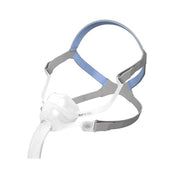
The ResMed AirFit P10 and the Philips DreamWear Under the Nose are two of the most popular minimal-contact masks in Canada, and they come from the two largest names in sleep therapy. Both are designed for people who find traditional masks bulky or claustrophobic, both keep the nose bridge free, and both are among the more affordable masks we stock.
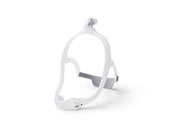
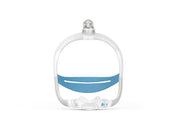
They take different routes to that goal. The AirFit P10 uses nasal pillows with a front tube connection and a three-piece design, while the DreamWear seals with an under-the-nose cushion and carries airflow through a hollow silicone frame with the tube at the top of the head. This comparison is based on the specifications published on the product pages at CPAP Machines Canada. Mask choice should be discussed with your healthcare provider or sleep specialist if you are uncertain.
Quick Comparison Overview
The table below summarizes key published details for both masks.
| Specification | AirFit P10 | DreamWear Under the Nose |
|---|---|---|
| Manufacturer | ResMed | Philips Respironics |
| Mask Type | Nasal pillows at the nostrils | Nasal, under-the-nose cushion |
| Tube Position | Front connection | Top of the head |
| Frame Design | Minimal 3-piece design | Hollow silicone frame — air flows through the frame |
| Frame Material | Not specified in listing | Soft flexible silicone with fabric wraps |
| Headgear | QuickFit auto-adjusting, split-strap | Standard or With Arms |
| Cushion Sizes Available | XS (pink), S (clear), M (grey), L (blue) | Small, Medium, Large, Medium-Wide |
| Cushions Included | 3 — Small, Medium, Large | Fit Pack: all four sizes |
| Frame Sizes | One size | Kit includes Small and Medium frames |
| Venting | QuietAir woven-mesh venting | Not specified in listing |
| Published Noise Claim | ~50% quieter than leading nasal pillow interfaces | Not specified in listing |
| Weight | ~0.165 kg; ~50% lighter than leading interfaces | Not specified in listing |
| Interchangeable Cushion Styles | Not specified in listing | Yes — nasal, pillow, and full face fit the same frame |
| Published User Data | Patients slept 40+ minutes longer per night in a clinical study | Rated more stable, more comfortable, and more appealing than their prescribed mask |
| Machine Compatibility | All CPAP, APAP, and BiPAP machines from all manufacturers | All machines except the ResMed AirMini |
| Price | $140 CAD | $120 CAD |
A key practical difference: the AirFit P10 is listed as compatible with all machines from all manufacturers, while the DreamWear listing excludes the ResMed AirMini. Current pricing for both is on their product pages.
Seal Style: Pillows vs Under the Nose
The AirFit P10 seals with nasal pillows at the nostril openings. Its pillows use a dual-wall design with what ResMed calls trampoline action — the walls flex and spring back under light contact rather than requiring firm pressure, which allows the seal to hold during movement without tightening the headgear. Sizes are colour-coded for quick identification: pink (extra small), clear (small), grey (medium), and blue (large).
The DreamWear Under the Nose seals beneath the nostrils with a minimal-contact cushion that does not enter them. Philips notes the design is intended to prevent red marks, discomfort, or irritation in the nostrils and on the nose bridge — a common reason people move away from traditional nasal masks. Four cushion sizes are available, including a Medium-Wide option for a wider nostril base.
Tubing, Weight, and Noise
The P10 keeps the hardware count to a minimum: just three parts, front tube connection, and QuickFit auto-adjusting elastic headgear you pull over your head. ResMed states it is approximately 50% lighter and 50% quieter than leading competing nasal pillow interfaces, thanks to QuietAir woven-mesh venting that diffuses exhaled air away from you and your partner. A clinical study found patients wearing the P10 slept more than 40 minutes longer per night. The three-piece construction also makes it the faster of the two to clean.
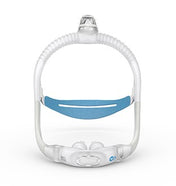
The DreamWear routes air through the frame itself, so no tube runs down the side of your head and nothing crosses your field of vision. The frame is soft, flexible silicone with fabric wraps that sit against the cheek, and Philips describes the goal as feeling like you are not wearing a mask at all. Two headgear styles are offered (Standard and With Arms). The DreamWear listing does not publish a noise rating or weight figure, so those rows read "Not specified in listing" and a direct numerical comparison is not possible.
If top-of-head tubing appeals to you but you want to stay with nasal pillows, our AirFit P10 vs AirFit P30i comparison covers exactly that decision.
What's in the Box
ResMed
AirFit P10
- 3 cushions: Small, Medium, Large
- Frame and QuickFit headgear
- Three-piece design — fastest to clean
- Dual-wall pillows with trampoline action
- QuietAir woven-mesh venting
- Works with all CPAP, APAP, and BiPAP machines
Philips
DreamWear Under the Nose
- Fit Pack: all cushions (S, M, L, Medium-Wide)
- 1 Medium frame + headgear with arms
- Tubing connector piece
- Kit option: S & M cushions with S & M frames
- Airflow travels through the silicone frame
- Nasal, pillow, and full face cushions interchange
Both are supplied as multi-size fit packs so you can trial the sizing at home, and both are covered by our 30-day Risk-Free Mask Guarantee. Replacement cushions for each are stocked in our CPAP mask parts collection; note that ResMed advises replacing P10 pillows every 2 to 3 months.
Which Users May Prefer Each Mask
Both masks suit people who want as little on their face as possible. The choice comes down to seal style, tube routing, and whether the interchangeable-cushion platform matters to you.
The AirFit P10 may suit users who:
- Want the lightest, most minimal mask with only three parts
- Prefer the targeted seal of nasal pillows
- Value published noise and weight data and the quietest possible venting
- Want the fastest cleaning routine
- Need compatibility with every machine type, including the AirMini
- Want colour-coded sizing including an extra small option
The DreamWear Under the Nose may suit users who:
- Find nasal pillows drying or irritating inside the nostrils
- Want the hose routed over the head, completely off the face
- Want the softest frame feel — flexible silicone with fabric wraps
- Need a wider cushion option such as Medium-Wide
- May later want to switch to pillow or full face cushions on the same frame
- Are looking for the lower-priced option
Frequently Asked Questions
What is the main difference between the AirFit P10 and the DreamWear?
How they seal and where the tube goes. The P10 uses nasal pillows at the nostril openings with a front tube connection and a three-piece design. The DreamWear seals under the nose and carries airflow through its hollow silicone frame, with the tube connecting at the top of the head.
Which mask is better if my nostrils get sore or dry?
The DreamWear Under the Nose is the usual alternative in that situation, because its cushion seals beneath the nostrils without entering them. Philips specifically notes the minimal-contact design is intended to prevent irritation in the nostrils and on the nose bridge. That said, nasal dryness can also relate to humidification settings, which is worth raising with your provider.
Which is quieter?
Only the P10 publishes a noise claim: ResMed states it is approximately 50% quieter than leading competing nasal pillow interfaces, using QuietAir woven-mesh venting. The DreamWear listing does not publish a noise rating, so a direct numerical comparison cannot be made from the available specifications.
Do both masks work with any CPAP machine?
The AirFit P10 is listed as compatible with all CPAP, APAP, and BiPAP machines from all manufacturers. The DreamWear listing states it works with any machine except the ResMed AirMini, which uses its own proprietary mask system. If you use an AirMini, the P10 is the relevant option here.
Which comes with more sizing options?
The DreamWear Fit Pack includes four cushion sizes (Small, Medium, Large, Medium-Wide), and the Kit option adds a choice of Small and Medium frames. The P10 includes three cushions (Small, Medium, Large) with a fourth extra small size available separately, all colour-coded for easy identification.
Can I change cushion style later on the DreamWear?
Yes — this is one of its distinguishing features. The DreamWear platform uses one frame with three interchangeable cushion options: nasal, pillow, and full face. If you later want a different style, you may be able to keep the frame and headgear. The P10 listing does not specify equivalent cross-style interchangeability.
How often should each mask be replaced?
Health Canada recommends replacing your CPAP mask every 6 months. For the AirFit P10 specifically, ResMed advises replacing the nasal pillow cushions every 2 to 3 months, as the silicone loses the elasticity that makes the dual-wall trampoline action work. Both masks should be cleaned daily with warm water and mild, unscented soap.
Need Help Choosing the Right Minimal-Contact Mask?
If you are choosing between the AirFit P10 and the DreamWear, or looking for a mask with less on your face, our team is happy to help you compare. Every eligible mask is covered by our 30-day Risk-Free Mask Guarantee.
CPAP Machines Canada
Website: cpapmachinescanada.ca
Toll Free: +1 (877) 820-4878
Email: support@cpapmachinescanada.ca