Introduction
When patients are ready to invest in a full home CPAP setup — or upgrade from an older device — the ResMed AirSense 11 AutoSet and the Philips DreamStation 2 Auto CPAP Advanced are two of the most commonly considered options in the current market. Both are full-featured auto-adjusting home machines with integrated heated humidifiers, colour touchscreens, app connectivity, and automatic altitude compensation. Yet each reflects its manufacturer's distinct approach to therapy comfort, data management, and user experience.
Choosing between them often comes down to factors like which app ecosystem you prefer, how you prioritize humidifier design, which comfort features matter most to you, and whether you are upgrading from a previous device within a particular brand's lineup. This article compares both machines based on manufacturer-published specifications and feature descriptions to help you understand the differences clearly. As always, any changes to your prescribed CPAP therapy should be discussed with your healthcare provider or sleep specialist.

Quick Comparison Overview
The table below summarizes key manufacturer-published specifications for both devices.
| Specification | ResMed AirSense 11 AutoSet | Philips DreamStation 2 Advanced |
|---|---|---|
| Machine Type | Auto CPAP (AutoSet) | Auto CPAP / CPAP |
| Pressure Range | Not specified (auto-adjusting) | 4–20 cm H₂O |
| Dimensions | Not specified in listing | 10.11" × 6.24" × 3.34" |
| Weight (device only) | Not specified in listing | 2.3 lbs / 1,040 g |
| Humidifier | Integrated heated (climate control) | Integrated adaptive (heated tube) |
| Humidifier Capacity | Not specified | 325 ml |
| Heated Tubing | Yes (included) | Yes — micro-flexible 12mm tube |
| Pressure Relief | EPR (Expiratory Pressure Relief) | Flex (Off / 1 / 2 / 3) |
| Ramp Feature | Sleep onset detection (auto) | Ramp Plus (15 / 30 / 45 min, or off) |
| Display | Touch screen | LCD colour touchscreen |
| Connectivity | Cloud / myAir app | Integrated modem / DreamMapper app |
| Altitude Compensation | Not specified | Automatic |
| Filters | Disposable fine mesh | Reusable pollen + disposable ultra-fine |
| Voltage | Not specified | 100–240V, 50/60 Hz |
| Warranty | 3 Years | 3 Years |
| Women's Therapy Mode | Yes (dedicated algorithm) | Not specified |
Both machines carry a three-year manufacturer's warranty and are designed as primary home CPAP devices rather than travel companions. Full specifications, current pricing, and availability for Canadian customers are listed on the product pages at CPAP Machines Canada.
Design, Build, and Portability
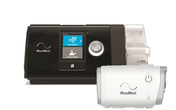
These are home-use machines, and their physical footprint reflects that. The DreamStation 2 Advanced publishes clear dimensional data: 10.11" × 6.24" × 3.34", weighing 2.3 lbs without the power supply and with an empty water tank. With the power supply included, total weight rises to approximately 2.94 lbs. The AirSense 11 does not publish equivalent dimensions in its product listing, but it is a similarly sized bedside device — compact enough for a nightstand while still accommodating a full integrated heated humidifier.
Both machines are designed with a modern aesthetic. The AirSense 11 features a sleek touchscreen interface and a prominent start/stop button for simple one-touch operation. The DreamStation 2 also uses a colour touchscreen with a push therapy button, and its three comfort settings are designed to be adjusted while therapy is running — without needing to pause or restart the device.
The DreamStation 2 uses a micro-flexible 12mm heated tube, which Philips describes as lighter than competing 15mm or larger CPAP heated tubing. This can reduce the physical presence of tubing on the bed and may be a comfort factor for some users. The AirSense 11 ships with either heated tubing or slimline tubing, giving patients a choice at setup.
Features and Technology Differences
Auto-Adjusting Pressure and Therapy Modes
Both machines adjust pressure automatically in response to the user's breathing throughout the night. The AirSense 11 AutoSet operates on a breath-by-breath basis and offers multiple therapy modes, including an AutoSet response mode designed for gentler pressure increases. It also includes a dedicated algorithm specifically developed for women, which accounts for differences in how Obstructive Sleep Apnea presents across biological sex — a feature not commonly found in competing devices and not listed as available on the DreamStation 2.
The DreamStation 2 supports both Auto CPAP and fixed CPAP modes, offering flexibility for patients whose prescription may change or who may use the device in a clinical setting. Its pressure range of 4–20 cm H₂O is published directly; the AirSense 11 does not list a pressure range in its product description but operates within a clinically standard range as an auto-adjusting device.
Ramp and Sleep Onset
The two machines take noticeably different approaches to starting therapy at a comfortable pressure. The AirSense 11 uses sleep onset detection — the device automatically delivers a lower airflow to help the user fall asleep, then gradually increases to the prescribed level once sleep is detected. This happens passively, without the user needing to configure a timer.
The DreamStation 2 uses Ramp Plus, a configurable ramp feature that allows the patient to select a specific comfortable starting pressure (4–10 cm H₂O) and a ramp duration (15, 30, or 45 minutes). If the device detects apnea events during the ramp period, it will move to the prescribed pressure early. Ramp Plus can also be turned off entirely. This approach gives the user more direct control over how therapy starts each night.
Pressure Relief During Exhalation
Exhaling against positive airflow pressure can be uncomfortable, particularly for new CPAP users. Both machines address this with pressure relief technology, though under different names and configurations. The AirSense 11 uses EPR (Expiratory Pressure Relief), which reduces pressure during exhalation while maintaining prescribed inhalation pressure. The DreamStation 2 uses Flex, which offers four settings — Off, 1, 2, and 3 — allowing patients and clinicians to dial in the level of relief that works best for the individual. Both approaches are well-established in their respective product lines.
Humidification
Both machines feature fully integrated heated humidifiers — neither requires a separate humidifier attachment. The AirSense 11's humidifier can operate in manual mode or in automatic climate control mode, which adjusts humidity levels dynamically. The removable water tub is designed for easy filling and cleaning. The DreamStation 2's humidifier uses adaptive humidification, adjusting both humidity output and heated tube temperature. Its water tank capacity is 325 ml, and the 12mm micro-flexible heated tube is noted for being lighter than larger-diameter alternatives.
Compatibility and Accessories
ResMed
AirSense 11 AutoSet
- Compatible with ResMed AirFit and AirTouch mask range
- Includes heated tubing or slimline tubing (choice at setup)
- Includes carry case and power cords
- Disposable fine mesh air filter
- myAir app with Personal Therapy Assistant and Care Check-In
- Automatic cloud data transmission via myAir
- Lifetime support from medically trained sleep professionals
Philips
DreamStation 2 Advanced
- Compatible with standard CPAP mask connections
- Micro-flexible 12mm heated tube included
- Reusable pollen filter and disposable ultra-fine filter
- DreamMapper app for tracking and goal-setting
- Integrated modem for care team connectivity
- Onboard data storage (minimum 6 months)
- 100–240V universal power supply
Both devices are compatible with a broad range of CPAP masks, though the AirSense 11 is optimized for use within the ResMed mask ecosystem — particularly the AirFit and AirTouch families. Patients already using ResMed masks may find the AirSense 11 integrates most naturally into their existing setup. The DreamStation 2 uses a standard connection and is compatible with masks across manufacturers.
The DreamStation 2 includes a dual filter system: a reusable pollen filter that can be rinsed and reused, plus a disposable ultra-fine filter for finer particulates. The AirSense 11 uses a single disposable fine mesh filter. The dual-filter approach of the DreamStation 2 may appeal to patients with environmental sensitivities or those who prefer having a reusable filtration layer.
For connectivity, both machines include integrated modems enabling therapy data to be transmitted to care teams and accessible via app. The AirSense 11 transmits data automatically to the cloud through the myAir platform. The DreamStation 2's integrated modem supports connectivity with Philips' care management infrastructure and the DreamMapper patient app. Full DreamStation 2 specifications are available on the product page.
Noise, Comfort, and Daily Use
Neither the AirSense 11 nor the DreamStation 2 publishes a specific dBA noise rating in the product listings available here, so a direct numerical noise comparison cannot be made. Both are home machines designed for quiet bedside operation, and both have been widely used in clinical and home settings with patient comfort as a design priority.
For daily ease of use, the AirSense 11's large start/stop button makes beginning and ending therapy straightforward, while the touchscreen allows patients to navigate therapy settings with minimal effort. The myAir app's Personal Therapy Assistant provides voice-guided setup instructions and troubleshooting, which can be particularly valuable for new CPAP users finding their footing in the first weeks of therapy.
The DreamStation 2's comfort settings are adjustable while therapy is running — meaning patients can tweak humidification or tube temperature mid-session without stopping and restarting the device. This level of in-session adjustability may be appreciated by patients who find their comfort needs vary night to night. The Ramp Plus starting pressure selection also gives users a tangible sense of control over how their night begins.
The AirSense 11's Care Check-In feature provides personalized coaching and assistance tailored to the individual patient's therapy journey. Combined with myAir's daily sleep scores and tailored tips, it represents a more guided support experience. The DreamStation 2's DreamMapper app supports progress tracking and goal-setting, connecting patients with their care team through the device's integrated modem. Full AirSense 11 feature details are available on the product page.
Which Users May Prefer Each Product
Both machines are well-suited as primary home CPAP devices for adults with Obstructive Sleep Apnea, and both offer a meaningful step forward from older-generation equipment. The differences between them are more about ecosystem preference and feature emphasis than fundamental capability.
The AirSense 11 AutoSet may suit patients who:
- Prefer passive, automatic sleep onset detection rather than a manual ramp timer
- Are women seeking a device with a dedicated female therapy algorithm
- Already use or prefer ResMed masks from the AirFit or AirTouch range
- Value a guided in-app support experience through myAir and Care Check-In
- Want automatic cloud data transmission without manual syncing
- Are upgrading from an AirSense 10 within the ResMed ecosystem
The DreamStation 2 Advanced may suit patients who:
- Prefer configurable ramp control with a specific starting pressure they can set
- Want adjustable comfort settings without pausing therapy mid-session
- Value a dual-filter system with a reusable pollen filter layer
- Are upgrading from a previous DreamStation device within the Philips ecosystem
- Want a lighter, micro-flexible heated tube option included in the box
- Prefer Flex pressure relief with four adjustable settings
Frequently Asked Questions
What is the difference between the AirSense 11's sleep onset detection and the DreamStation 2's Ramp Plus?
Sleep onset detection on the AirSense 11 works automatically — the device delivers a lower pressure until it detects the user has fallen asleep, then gradually increases to the prescribed level without any input from the patient. Ramp Plus on the DreamStation 2 is configurable: the user or clinician selects a specific starting pressure and a ramp duration (15, 30, or 45 minutes). If the device detects apnea events during the ramp, it advances to the prescribed pressure early. Both approaches reduce the discomfort of starting therapy at full pressure, but one is automatic while the other offers more user control.
Do both machines include a heated humidifier?
Yes. Both the AirSense 11 and the DreamStation 2 Advanced include fully integrated heated humidifiers — neither requires a separate humidifier attachment. The AirSense 11's humidifier can be operated manually or set to automatic climate control mode. The DreamStation 2 uses adaptive humidification and works in conjunction with its micro-flexible 12mm heated tube. Both humidifiers are removable for filling and cleaning.
Is there a dedicated therapy mode for women on either device?
Yes, but only on the AirSense 11. ResMed has included a dedicated algorithm mode on the AirSense 11 that is specifically designed to account for differences in how Obstructive Sleep Apnea presents in women, aiming to deliver more targeted therapy. The DreamStation 2 does not list an equivalent gender-specific therapy mode in its published specifications.
What apps are available for each device, and what do they offer?
The AirSense 11 connects to ResMed's myAir platform, which provides daily sleep scores, tailored coaching tips, a Personal Therapy Assistant for guided setup and troubleshooting, and the Care Check-In feature for personalized support. Data is transmitted automatically to the cloud. The DreamStation 2 connects to the Philips DreamMapper app, which supports progress tracking, goal-setting, and care team connectivity via the device's integrated modem. Both platforms are designed to support long-term therapy compliance.
Can either machine be used internationally?
The DreamStation 2 publishes a universal voltage rating of 100–240V at 50/60 Hz, meaning it can be used with most international electrical standards using the appropriate plug adapter. The AirSense 11's voltage specifications are not listed in the product information available here. Patients planning to travel internationally with either device should confirm voltage compatibility and plug requirements prior to departure.
How do the filters compare between the two machines?
The AirSense 11 uses a single disposable fine mesh filter designed to capture environmental particulates. The DreamStation 2 uses a two-filter system: a reusable pollen filter that can be washed and reused, plus a disposable ultra-fine filter for finer particles. The dual-filter design of the DreamStation 2 may be advantageous for patients with allergies or those living in environments with higher particulate levels.
What warranties do these machines carry?
Both the AirSense 11 AutoSet and the DreamStation 2 Advanced include a three-year manufacturer's warranty. Warranty terms, service processes, and conditions may differ between ResMed and Philips. Canadian customers should confirm warranty service availability at the time of purchase through their retailer.
Need Help Choosing the Right CPAP?
If you have questions about the AirSense 11, the DreamStation 2, or any other CPAP equipment, our team is here to help. Whether you're setting up therapy for the first time or upgrading from an older device, we're happy to point you in the right direction.
CPAP Machines Canada
Website: cpapmachinescanada.ca
Toll Free: +1 (877) 820-4878
Email: support@cpapmachinescanada.ca