Introduction
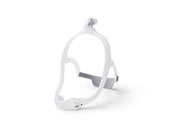
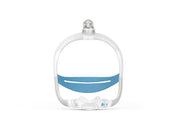
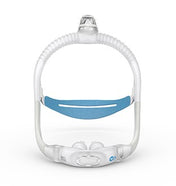
The ResMed AirFit N30i and the ResMed AirFit P30i are the two members of ResMed's top-of-the-head tube family, and they are among the most commonly cross-shopped masks in Canada. Both use the same SpringFit frame concept, both route tubing over the crown of your head instead of across your face, and both are priced identically at CPAP Machines Canada. Both also arrive as starter packs with multiple cushion sizes included.
The single real difference is what touches your nose. The N30i uses a nasal cradle cushion that sits under the nose, while the P30i uses nasal pillows that seal at the nostril openings. That one distinction drives everything else: how it feels, who it suits, and which one is likely to work for you. This comparison uses the specifications published on the product pages at CPAP Machines Canada. As always, mask choice should be discussed with your healthcare provider or sleep specialist if you are unsure.
Quick Comparison Overview
The table below summarizes key published details for both masks.
| Specification | AirFit N30i | AirFit P30i |
|---|---|---|
| Manufacturer | ResMed | ResMed |
| Mask Type | Nasal cradle (under the nose) | Nasal pillows (at the nostrils) |
| Tube Position | Top of the head, on a swivel | Top of the head |
| Frame | SpringFit frame | SpringFit frame |
| Frame Sizes | Standard, Small | Standard, Small |
| Cushions Included | 3 — Small, Small-Wide, Medium | 2 per frame — M & L (Standard), S & M (Small) |
| Vent Technology | Not specified in listing | QuietAir vent technology |
| Published Noise Claim | Not specified in listing | 80% quieter than the market-leading mask |
| Quick-Release Elbow | Not specified in listing | Yes |
| Published Fit Data | 86% said it sealed really well; 90% found it easy to fit | Twice as many users found it easier to use than the market-leading mask |
| In the Box | Frame, headgear, 3 cushions | Frame, headgear, 2 cushions |
| Machine Compatibility | All machines except the ResMed AirMini | All machines except the ResMed AirMini |
| Replacement Guidance | Every 6 months (Health Canada) | Every 6 months (Health Canada) |
| Price | $154 CAD | $154 CAD |
Neither mask works with the ResMed AirMini travel CPAP — that machine uses its own proprietary mask system. Current pricing and stock for both are on their product pages, and both sit in our nasal pillow mask collection.
Cushion Design: Cradle vs Pillows
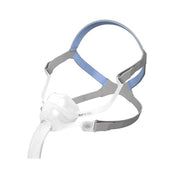
The AirFit N30i uses a nasal cradle cushion that rests against the base of the nose and seals underneath the nostrils without entering them. Nothing is inserted, and there is no contact with the bridge of the nose. ResMed's published study data reports that 86% of users found the N30i sealed really well and 90% found it very easy to fit and adjust.
The AirFit P30i uses nasal pillows that seal directly at the nostril openings. Pillows make contact with a smaller area and give a slightly more secure, targeted seal, which some users find holds better at higher pressures. ResMed describes the P30i as the most preferred mask of its kind and states that twice as many CPAP users find it easier to use than the market-leading mask.
Shared Design: The SpringFit Frame and Top Tube
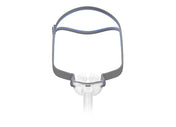
Both masks share the feature that makes this family popular: the tube connects at the top of the head rather than in front of your face. Nothing crosses your field of vision, so you can read or watch television with the mask on, and the hose is far less likely to be pulled or tangled when you change position. On the N30i the connection sits on a swivel, allowing you to move freely through the night.
Both use the SpringFit frame, designed to flex and adapt to the shape of your face for a stable fit without heavy strap tension. Both come in Standard and Small frame sizes, so the frame is fitted to your head while the cushion is fitted to your nose — two independent adjustments.
The P30i adds a quick-release elbow, letting you disconnect from therapy for a night-time trip out of bed without parts getting stuck or lost. It also uses QuietAir vent technology, which breaks up exhaled air for quieter, gentler airflow — ResMed states it is 80% quieter than the market-leading mask. The N30i listing does not publish an equivalent noise figure, so a direct numerical noise comparison is not possible from the product pages.
Sizing and What's in the Box
ResMed
AirFit N30i Starter Pack
- 1 mask frame (Standard or Small)
- Headgear
- 3 cushions: Small, Small-Wide, Medium
- Nasal cradle seal — nothing in the nostrils
- Top-of-head tube on a swivel
- Not compatible with the ResMed AirMini
ResMed
AirFit P30i Starter Pack
- 1 mask frame (Standard or Small)
- Headgear
- 2 cushions: M & L with Standard, S & M with Small
- Nasal pillow seal at the nostrils
- QuietAir venting + quick-release elbow
- Not compatible with the ResMed AirMini
Both are sold as fit packs so you can trial sizes at home rather than guessing. Note the difference in cushion range: the N30i includes a Small-Wide option, useful if your nostril base is wider than standard sizing accommodates, while the P30i's cushions are supplied according to the frame size you choose. Both masks are covered by our 30-day Risk-Free Mask Guarantee, so if the style does not suit you, it can be exchanged.
Which Users May Prefer Each Mask
Because these two masks share a frame design, a tube position, and a price, the decision really comes down to the cushion style and how your nose responds to it.
The AirFit N30i may suit users who:
- Find nasal pillows irritating or drying inside the nostrils
- Want a seal that sits under the nose with nothing inserted
- Need a wider cushion option — the Small-Wide size is included
- Want three cushion sizes in the box to trial the fit
- Have had red marks or soreness on the nose bridge from other masks
The AirFit P30i may suit users who:
- Prefer the targeted, secure seal of nasal pillows
- Want the quietest option — QuietAir venting with a published 80% noise claim
- Value a quick-release elbow for getting up during the night
- Move a lot at night and want pillows that hold their position
- Are already comfortable with a pillow-style mask and want top-of-head tubing
Frequently Asked Questions
What is the main difference between the AirFit N30i and the AirFit P30i?
The cushion. The N30i uses a nasal cradle that seals under the nose without entering the nostrils, while the P30i uses nasal pillows that seal at the nostril openings. Everything else — the SpringFit frame, the top-of-the-head tube, the frame sizes, and the price — is closely matched.
Which one is quieter?
The P30i publishes a specific claim: it uses QuietAir vent technology and ResMed states it is 80% quieter than the market-leading mask. The N30i's product listing does not publish a comparable noise figure, so a direct numerical comparison cannot be made from the available specifications.
Do either of these masks work with the ResMed AirMini?
No. Both product listings state clearly that the mask is compatible with any CPAP machine from any manufacturer except the ResMed AirMini. The AirMini uses its own proprietary mask and connector system. If you use an AirMini, you need an AirMini-specific mask setup.
How many cushion sizes come in the box?
The N30i starter pack includes three cushions: Small, Small-Wide, and Medium. The P30i includes two cushions matched to the frame you select — Medium and Large with the Standard frame, Small and Medium with the Small frame. Both are sold as fit packs so you can trial sizes at home.
Is the frame size the same as the cushion size?
No, and this trips up a lot of people. The frame size (Standard or Small) relates to the dimensions of your head and where the tube sits, while the cushion size relates to your nose. You may well need a Standard frame with a Small cushion, or the reverse. Both masks let you size the two independently.
Which is better for side sleepers?
Both are well suited to side sleeping because the tube exits at the top of the head rather than in front of the face, keeping the hose clear of the pillow. The N30i's swivel connection adds freedom of movement, while the P30i's pillows tend to hold their seal well during position changes. Individual results depend on your face shape and how much you move.
How often should these masks be replaced?
Health Canada recommends replacing your CPAP mask every 6 months. Over time the cushion and headgear stretch and wear, which reduces seal quality and increases leaks. Both masks should also be cleaned daily with warm water and mild, unscented soap.
Need Help Choosing the Right Mask?
If you are weighing the AirFit N30i against the AirFit P30i, or you are not sure which cushion style suits your face, our team is here to help. Every eligible mask is covered by our 30-day Risk-Free Mask Guarantee.
CPAP Machines Canada
Website: cpapmachinescanada.ca
Toll Free: +1 (877) 820-4878
Email: support@cpapmachinescanada.ca