Introduction
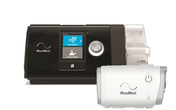
If you have just been diagnosed with sleep apnea, or you are researching a replacement machine, you will quickly run into three acronyms: CPAP, APAP, and BiPAP. They all deliver pressurised air to keep your airway open during sleep, and they all use the same masks and tubing. What separates them is how that pressure is delivered — one fixed level, an automatically adjusting range, or two distinct levels for breathing in and out.
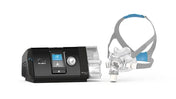
This guide explains the difference in plain language so you can understand what your prescription means and what to expect from each type of machine. CPAP Machines Canada stocks all three categories: CPAP machines, Auto CPAP (APAP) machines, and BiPAP machines. Importantly, which one is appropriate for you is a clinical decision — all three require a prescription, and the type and settings must be determined by your prescribing physician or sleep specialist.
Quick Comparison Overview
The table below summarizes how the three machine types differ in the way they deliver therapy.
| Characteristic | CPAP | APAP (Auto CPAP) | BiPAP (Bilevel) |
|---|---|---|---|
| Full Name | Continuous Positive Airway Pressure | Automatic Positive Airway Pressure | Bilevel Positive Airway Pressure |
| Pressure Delivery | One fixed pressure all night | Auto-adjusts within a prescribed range | Two pressures: higher on inhale, lower on exhale |
| Responds to Your Breathing | No — constant | Yes — adjusts breath by breath | Yes — switches between two set levels |
| Typical Pressure Setting | Single value (e.g. 10 cm H₂O) | A range (commonly 4–20 cm H₂O) | Separate inhale (IPAP) and exhale (EPAP) values |
| Exhale Comfort | Via pressure-relief features | Via pressure-relief features plus lower average pressure | Built in — exhale pressure is a separate setting |
| Commonly Prescribed For | Obstructive sleep apnea with a stable pressure need | Obstructive sleep apnea where pressure needs vary | Higher pressure needs, or when CPAP/APAP is not tolerated |
| Prescription Required | Yes | Yes | Yes |
| Mask Compatibility | Standard CPAP masks | Standard CPAP masks | Standard CPAP masks |
| Relative Cost | Generally lowest | Mid-range | Generally highest |
| Shop at CPAP Machines Canada | CPAP machines | Auto CPAP machines | BiPAP machines |
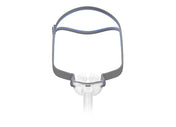
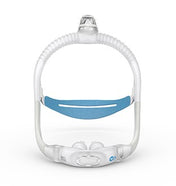
All three types work with the same mask styles — nasal, nasal pillow, and full face — so changing machine type does not usually mean changing the mask you are used to.
How Each Type Works
CPAP — one steady pressure
A CPAP machine delivers a single, constant pressure that stays the same from the moment therapy starts until you take the mask off. Your clinician determines that one number, usually from a sleep study or a titration period. Because the pressure never changes, CPAP is the simplest of the three to set up and generally the most affordable. The trade-off is that the pressure is calibrated to cover your worst-case need, so you receive that same level even during parts of the night when less would be sufficient.
APAP — a pressure range that adapts
An APAP machine, usually sold as an "Auto CPAP" or "AutoSet", is prescribed with a minimum and a maximum pressure rather than a single value. The device monitors your breathing and moves within that range throughout the night, increasing when it detects airway narrowing and easing off when you do not need as much. Because pressure needs genuinely do vary — with sleep position, sleep stage, alcohol, congestion, and weight changes — APAP often results in a lower average pressure across the night. Most modern home machines sold today are auto-adjusting, including the models covered in our AirSense 11 vs DreamStation 2 comparison.
BiPAP — two separate pressures
A BiPAP (bilevel) machine uses two distinct pressures: a higher one when you breathe in (IPAP) and a lower one when you breathe out (EPAP). The machine senses your breathing cycle and switches between them. Because the drop on exhalation is a prescribed setting rather than a comfort feature, bilevel therapy can be considerably easier to exhale against — which is why it is often considered when someone requires high pressures or has not tolerated CPAP or APAP. Bilevel devices are also used for certain conditions beyond straightforward obstructive sleep apnea, which is one reason the prescribing decision sits firmly with your clinician.
Comfort, Cost, and Daily Use
On exhale comfort, all three approaches address the sensation of breathing out against incoming air, but in different ways. CPAP and APAP machines typically include a pressure-relief feature that eases pressure slightly during exhalation. BiPAP builds the difference into the prescription itself, with a separately set exhale pressure that is usually a larger drop than a comfort feature provides.
On data and apps, the machine type does not determine the quality of reporting — the specific model does. Current home machines across all three categories record compliance and therapy data, and most connect to a smartphone app so you and your care team can review progress.
On cost, CPAP is generally the most affordable, APAP sits in the middle, and BiPAP is typically the most expensive, reflecting the added complexity of bilevel delivery. Many Canadian extended health plans cover part of the cost of a prescribed machine; current pricing for each category is listed on the collection pages, and our team can help you with the paperwork for a reimbursement claim.
Which Type Is Usually Prescribed for Whom
The most important point in this whole guide: you do not choose between CPAP, APAP, and BiPAP yourself. The machine type and its settings come from your prescription. The summaries below describe the general clinical reasoning so you understand what your prescription means — not so you can self-select.
A CPAP machine may be prescribed when:
- A sleep study has established a single effective pressure that works consistently
- Pressure requirements are stable through the night and across positions
- A straightforward, lower-cost device meets the clinical need
An APAP machine may be prescribed when:
- Pressure needs vary through the night, by sleep position, or over time
- A single fixed pressure has felt higher than necessary for much of the night
- The prescriber wants a pressure range rather than a single titrated value
A BiPAP machine may be prescribed when:
- Higher therapy pressures are required and exhaling against them is difficult
- CPAP or APAP therapy has not been tolerated despite comfort adjustments
- The clinical picture calls for separately controlled inhale and exhale pressures
Frequently Asked Questions
What is the difference between CPAP and APAP?
A CPAP machine delivers one fixed pressure all night long. An APAP (Auto CPAP) machine is prescribed with a pressure range and automatically adjusts within it, responding to your breathing throughout the night. Because APAP can ease off when less pressure is needed, the average pressure over the night is often lower than a fixed CPAP setting.
Is BiPAP better than CPAP?
Neither is universally better — they suit different clinical situations. BiPAP uses separate inhale and exhale pressures, which can make breathing out substantially easier, so it is often considered when higher pressures are needed or when CPAP has not been tolerated. For many people with straightforward obstructive sleep apnea, CPAP or APAP is effective and less costly. Your prescriber determines which is appropriate.
Can I use the same mask with all three machine types?
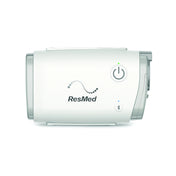
In general, yes. CPAP, APAP, and BiPAP machines use standard CPAP mask connections, so nasal, nasal pillow, and full face masks work across all three. The main exceptions are certain travel machines that use proprietary connections. If you are switching machines, check compatibility for your specific mask and device, or contact us and we will confirm it for you.
Do I need a prescription for all three types?
Yes. In Canada, CPAP, APAP, and BiPAP machines all require a valid prescription. The prescription specifies the machine type and the pressure settings. You can send yours to us through our prescription submission page and we will set the device up accordingly.
Is an Auto CPAP the same thing as an APAP?
Yes. "Auto CPAP", "APAP", and brand terms such as "AutoSet" all describe the same thing: a machine that adjusts pressure automatically within a prescribed range. You will see the terms used interchangeably in product listings and clinical documents.
Which type of machine is most common today?
Auto-adjusting (APAP) machines make up the majority of current home devices. Most flagship home models sold today, including those in our Auto CPAP collection, are auto-adjusting and can also be configured to run in fixed CPAP mode if a prescription calls for it.
Are travel machines available in all three types?
Travel machines are most commonly auto-adjusting (APAP), and several can run in fixed CPAP mode as well. Bilevel therapy in a travel form factor is far less common. If you need a portable machine, our travel machines collection and our travel comparisons such as Transcend Micro vs AirMini are the place to start.
Need Help Choosing the Right Machine Type?
If you are unsure what your prescription means, or you want help matching a machine to it, our team is happy to walk you through the options. We can also help with insurance paperwork and prescription submission.
CPAP Machines Canada
Website: cpapmachinescanada.ca
Toll Free: +1 (877) 820-4878
Email: support@cpapmachinescanada.ca