Introduction
Le ResMed AirSense 10 a été l'une des machines de PPC les plus largement prescrites et fiables au Canada pendant des années. Lorsque ResMed a lancé l' AirSense 11 AutoSet, de nombreux utilisateurs existants ont commencé à poser une question simple : est-ce que ça vaut la peine de le mettre à niveau ?
Cette comparaison examine les deux machines côte à côte, sur la base des spécifications publiées par le fabricant et des descriptions de fonctionnalités, pour vous aider à comprendre ce qui a changé, ce qui est resté le même, et quel appareil peut être le mieux adapté en fonction de votre parcours thérapeutique. Que vous achetiez votre première machine de PPC ou que vous envisagiez une mise à niveau depuis l' AirSense 10, les informations ci-dessous visent à soutenir une conversation éclairée avec votre professionnel de la santé ou votre spécialiste du sommeil.
Aperçu comparatif rapide
Le tableau ci-dessous présente les principales caractéristiques et spécifications des deux appareils, basées sur les informations du fabricant.
| Caractéristique | ResMed AirSense 10 AutoSet | ResMed AirSense 11 AutoSet |
|---|---|---|
| Type de machine | PPC automatique (APAP) | PPC automatique (APAP) |
| Humidificateur | HumidAir intégré | Humidificateur chauffant intégré |
| Tuyau chauffant | ClimateLineAir (inclus) | Tuyau chauffant (inclus) |
| Contrôle climatique | Oui (avec ClimateLineAir) | Oui (manuel ou automatique) |
| Rampe / Détection du début du sommeil | AutoRamp avec détection du début du sommeil | Détection du début du sommeil (automatique) |
| Soulagement de la pression | EPR (Expiratory Pressure Relief) | EPR (Expiratory Pressure Relief) |
| Écran | Écran LCD couleur | Écran tactile |
| Démarrage / Arrêt automatique | SmartStart (activé par la respiration) | Grand bouton de démarrage/arrêt |
| Connectivité sans fil | Sans fil intégré | Intégré (cloud via myAir) |
| Application | myAir (iOS et Android) | myAir avec Care Check-In et Personal Therapy Assistant |
| Mode thérapie pour femmes | Non répertorié | Oui (algorithme dédié) |
| Capteur de lumière ambiante | Oui | Non répertorié |
| Filtre | Maille fine jetable | Maille fine jetable |
| Mallette de transport | Incluse | Incluse |
| Compatibilité du masque | Tous les masques de PPC | Tous les masques de PPC |
| Garantie | 3 ans | 3 ans |
À première vue, les deux machines partagent la même technologie de thérapie de base et le même format général. L'AirSense 11 introduit des raffinements dans l'interface utilisateur, l'expérience de l'application et les modes de thérapie plutôt qu'une refonte fondamentale de la plateforme de PPC sous-jacente.
Conception, fabrication et utilisation quotidienne
Les deux machines sont conçues comme des appareils de PPC de chevet complets avec des humidificateurs chauffants intégrés. L'encombrement physique de chacun est comparable, et les deux incluent une mallette de transport et des cordons d'alimentation pour les patients qui voyagent occasionnellement avec leur machine à domicile.
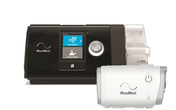
L'AirSense 10 utilise un écran LCD couleur avec une interface de navigation basée sur des boutons, que de nombreux utilisateurs de longue date trouvent familière et simple. Son capteur de lumière ambiante intégré ajuste automatiquement la luminosité de l'écran pour s'adapter à l'obscurité de la pièce, minimisant les perturbations si vous ou votre partenaire de lit vous réveillez pendant la nuit. Cette fonction n'est pas répertoriée sur l'AirSense 11.
L'AirSense 11 passe à une interface tactile avec un grand bouton de démarrage/arrêt bien visible pour un contrôle de la thérapie en un seul toucher. La conception mise à jour vise à rendre l'appareil plus facile à naviguer pour les nouveaux utilisateurs et ceux qui trouvent les interfaces tactiles plus intuitives. L'esthétique générale est plus contemporaine, bien que le fonctionnement pratique des deux machines suive le même schéma général.
Différences de fonctionnalités et de technologie
Thérapie à ajustement automatique
Les deux machines sont des appareils de PPC automatique qui surveillent en permanence la respiration tout au long de la nuit et ajustent la pression pour fournir le niveau efficace le plus bas à tout moment. L'AirSense 10 comprend une détection d'événements avancée qui différencie les apnées obstructives et centrales, garantissant une réponse thérapeutique appropriée à chaque type d'événement. L'AirSense 11 s'appuie sur le même algorithme AutoSet avec un mode supplémentaire conçu spécifiquement pour les femmes, qui tient compte des différences dans la façon dont l'apnée obstructive du sommeil se manifeste selon le sexe biologique. Ce mode de thérapie dédié n'est pas répertorié comme une fonctionnalité sur l'AirSense 10.
Détection du début du sommeil et rampe
Les deux appareils utilisent la détection du début du sommeil pour faciliter l'entrée en thérapie des patients au début de chaque séance. L'AutoRamp de l'AirSense 10 démarre à une pression basse et confortable pendant que l'utilisateur s'endort, puis augmente progressivement jusqu'au niveau prescrit une fois le sommeil détecté. L'AirSense 11 utilise la même approche sous-jacente, délivrant initialement une faible pression d'air et l'augmentant régulièrement après que l'utilisateur s'est endormi. En pratique, ces deux fonctions fonctionnent de manière similaire et servent le même objectif.
Soulagement de la pression expiratoire
Les deux machines incluent l'EPR (Expiratory Pressure Relief), qui réduit la pression pendant l'expiration pour rendre l'expiration contre le flux d'air de la PPC plus naturelle. Cette fonction est bien établie dans la gamme de produits ResMed et fonctionne de manière cohérente entre les deux appareils.
Humidification et tuyau chauffant
L'AirSense 10 utilise l'humidificateur intégré HumidAir et le tuyau chauffant ClimateLineAir avec la technologie Climate Control de ResMed, qui maintient une température et une humidité constantes sur toute la longueur du tuyau et réduit considérablement la condensation. L'AirSense 11 utilise un humidificateur chauffant intégré avec une fonction de contrôle climatique qui peut être réglée manuellement ou automatiquement, offrant des fonctionnalités similaires avec une approche de contrôle légèrement plus flexible. Les deux systèmes nécessitent de l'eau distillée et sont conçus pour un retrait et un nettoyage faciles.
Connectivité et fonctionnalités de l'application
Les deux appareils transmettent les données de thérapie sans fil à la plateforme cloud de ResMed et prennent en charge l'application myAir sur iOS et Android. L'AirSense 10 permet un partage automatique des données avec les équipes de soins via AirView, auquel les patients peuvent également accéder personnellement via myAir pour les scores de sommeil et le suivi des progrès.
L'AirSense 11 étend cela avec deux fonctionnalités supplémentaires basées sur l'application. L'Assistant Thérapeutique Personnel fournit des instructions de configuration guidées par la voix et un dépannage étape par étape dans myAir – particulièrement utile pour les nouveaux utilisateurs. La fonction Care Check-In offre un coaching personnalisé adapté aux progrès thérapeutiques de chaque patient. Ces ajouts rendent l'expérience de support numérique de l'AirSense 11 plus proactive que celle disponible sur l'AirSense 10.
Compatibilité et accessoires
ResMed
AirSense 10 AutoSet
- Compatible avec tous les masques de PPC de tous les fabricants
- Tuyau chauffant ClimateLineAir inclus
- Mallette de transport et cordons d'alimentation inclus
- Filtre à mailles fines jetable inclus
- Application myAir (iOS et Android)
- Plateforme cloud AirView pour l'accès aux données de l'équipe de soins
- Thérapie SmartStart activée par la respiration
- Capteur de lumière ambiante pour une perturbation minimale de la chambre à coucher
- Support à vie des professionnels du sommeil de CPAP Machines Canada
ResMed
AirSense 11 AutoSet
- Compatible avec tous les masques de PPC de tous les fabricants
- Tuyau chauffant inclus
- Mallette de transport et cordons d'alimentation inclus
- Filtres à mailles fines jetables inclus
- myAir avec Assistant Thérapeutique Personnel et Care Check-In
- Transmission automatique des données via le cloud
- Algorithme de thérapie dédié aux femmes
- Masque CPAP de votre choix inclus (pack)
- Support à vie des professionnels du sommeil de CPAP Machines Canada
Les deux machines sont compatibles avec tous les masques de PPC de tous les fabricants, de sorte que les utilisateurs de masques existants n'ont pas besoin de changer leur interface lorsqu'ils passent de l'un à l'autre. Les pièces de rechange pour les deux machines, y compris les réservoirs d'eau, les tuyaux chauffants et les filtres, sont disponibles chez CPAP Machines Canada.
Le calendrier de remplacement recommandé pour les pièces consommables est le même pour les deux appareils : filtres jetables tous les un à deux mois, réservoirs d'eau tous les six mois et tuyaux chauffants tous les trois à six mois. Les détails complets des pièces de rechange de l'AirSense 10 sont répertoriés sur la page du produit.
Bruit, confort et utilisation quotidienne
L'AirSense 10 est équipé du moteur Easy-Breathe de ResMed, spécifiquement noté dans la liste des produits pour son fonctionnement silencieux et discret et largement considéré comme l'un des moteurs de PPC les plus silencieux disponibles. L'AirSense 11 ne mentionne pas de désignation de moteur spécifique ni de niveau sonore dans ses informations produit, bien qu'il soit également conçu comme un appareil domestique silencieux destiné aux environnements de sommeil partagés.
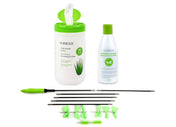
Pour le nettoyage et l'entretien, les deux machines suivent la même routine générale : laver le masque quotidiennement, le tuyau et la chambre à eau trois à quatre fois par semaine avec de l'eau tiède et du savon doux non parfumé, et faire tremper la chambre à eau chaque semaine dans une solution diluée de vinaigre blanc. De l'eau distillée doit être utilisée dans les deux humidificateurs pour éviter l'accumulation de minéraux. Aucune des machines ne doit être immergée dans l'eau.
Les patients qui passent de l'AirSense 10 à l'AirSense 11 trouveront l'expérience thérapeutique de base familière. La délivrance de la pression, l'EPR et la détection du début du sommeil fonctionnent selon des principes similaires. Les changements les plus notables dans l'utilisation quotidienne sont l'interface à écran tactile mise à jour, les fonctionnalités étendues de l'application myAir et l'ajout du mode thérapeutique pour femmes pour les patients éligibles. Les détails complets de l'AirSense 11 et le contenu du pack sont disponibles sur la page du produit.
Quels utilisateurs peuvent préférer chaque produit
Étant donné que les deux machines partagent la même technologie thérapeutique fondamentale du même fabricant, le choix entre elles concerne moins la capacité thérapeutique que les fonctionnalités qui correspondent à vos préférences quotidiennes et à vos objectifs thérapeutiques.
L'AirSense 10 AutoSet peut convenir aux patients qui :
- Sont satisfaits de leur AirSense 10 actuel et n'ont pas de problèmes thérapeutiques non résolus
- Préfèrent la navigation par boutons à une interface à écran tactile
- Apprécient le capteur de lumière ambiante pour une perturbation minimale de la chambre à coucher la nuit
- Préfèrent SmartStart pour une initiation thérapeutique entièrement mains libres, activée par la respiration
- Recherchent un appareil cliniquement prouvé, bien pris en charge et à un prix potentiellement plus bas
L'AirSense 11 AutoSet peut convenir aux patients qui :
- Achètent leur première machine de PPC et souhaitent le modèle ResMed le plus récent
- Sont des femmes recherchant un appareil avec un algorithme de thérapie dédié pour un traitement plus ciblé
- Souhaitent une configuration et un dépannage guidés dans l'application via l'Assistant Thérapeutique Personnel
- Apprécient la fonction Care Check-In pour un coaching personnalisé continu via myAir
- Préfèrent une interface tactile moderne
- Souhaitent un pack complet qui comprend un masque de PPC de leur choix
Questions fréquemment posées
L'AirSense 11 est-il une amélioration significative par rapport à l'AirSense 10 ?
L'AirSense 11 partage la même technologie de thérapie AutoSet de base que l'AirSense 10 et offre une thérapie PPC auto-ajustable équivalente. Les ajouts les plus significatifs de l'AirSense 11 sont l'algorithme de thérapie dédié aux femmes, les fonctionnalités étendues de l'application myAir, notamment l'Assistant Thérapeutique Personnel et le Care Check-In, et l'interface à écran tactile mise à jour. Pour les patients dont l'AirSense 10 fonctionne bien, la mise à niveau est une question de préférence plutôt que de nécessité clinique. Pour les nouveaux patients, l'AirSense 11 représente la génération actuelle de la gamme de PPC domestique de ResMed.
Puis-je utiliser mon masque et mon tuyau existants avec l'AirSense 11 si je passe de l'AirSense 10 ?
Les deux machines sont compatibles avec tous les masques de PPC de tous les fabricants, de sorte que votre masque existant peut être utilisé avec l'un ou l'autre appareil. En ce qui concerne les tuyaux, l'AirSense 11 utilise son propre tuyau chauffant compatible. Si vous utilisez actuellement le tuyau ClimateLineAir de l'AirSense 10, vérifiez la compatibilité avec l'AirSense 11 avant de supposer qu'il est transférable. Le pack AirSense 11 de CPAP Machines Canada comprend un tuyau chauffant compatible dans la boîte.
Les deux machines utilisent-elles l'application myAir ?
Oui. Les deux se connectent à l'application ResMed myAir sur iOS et Android et transmettent les données de thérapie sans fil pour l'accès par votre équipe de soins. L'AirSense 11 ajoute deux fonctionnalités non disponibles sur l'AirSense 10 dans myAir : l'Assistant Thérapeutique Personnel pour la configuration et le dépannage guidés, et la fonction Care Check-In pour un coaching personnalisé continu.
Quel type d'eau dois-je utiliser dans l'humidificateur des deux machines ?
Utilisez toujours de l'eau distillée dans la chambre de l'humidificateur des deux machines. L'eau du robinet contient des minéraux qui s'accumulent au fil du temps, réduisant les performances de l'humidificateur et pouvant potentiellement endommager la chambre. L'eau distillée est disponible dans la plupart des pharmacies et des épiceries au Canada.
L'AirSense 11 a-t-il un mode thérapeutique pour les femmes et à quoi sert-il ?
Oui. L'AirSense 11 inclut un mode algorithmique dédié développé spécifiquement pour les femmes, qui tient compte des différences dans la façon dont l'apnée obstructive du sommeil se manifeste selon le sexe biologique, dans le but de fournir des ajustements de pression plus ciblés. Ce mode n'est pas répertorié comme une fonctionnalité sur l'AirSense 10. Les patients intéressés par cette fonctionnalité doivent discuter de son applicabilité avec leur fournisseur de soins de santé prescripteur.
Comment nettoyer la chambre de l'humidificateur sur l'un ou l'autre appareil ?
Lavez la chambre à eau trois à quatre fois par semaine avec de l'eau tiède et du savon doux non parfumé, rincez abondamment et laissez sécher à l'air libre, à l'abri de la lumière directe du soleil. Une fois par semaine, faites tremper la chambre pendant 15 à 20 minutes dans une solution d'une part de vinaigre blanc pour trois parts d'eau, puis rincez abondamment avant de la réutiliser. Remplacez la chambre à eau tous les six mois dans le cadre de l'entretien courant.
Quelles garanties ces machines offrent-elles ?
Les deux AirSense 10 AutoSet et AirSense 11 AutoSet sont couverts par une garantie fabricant de trois ans. CPAP Machines Canada offre également un support à vie de la part d'une équipe de professionnels du sommeil médicalement formés pour la durée de vie de l'une ou l'autre machine.
Besoin d'aide pour choisir le bon PPC ?
Que vous mettiez en place une thérapie PPC pour la première fois ou que vous envisagiez une mise à niveau à partir d'un ancien appareil, notre équipe est là pour vous aider. Nous sommes heureux de répondre à vos questions sur l'une ou l'autre machine, de discuter de la compatibilité avec votre équipement actuel ou de vous aider à trouver le pack adapté à vos besoins.
CPAP Machines Canada
Site web : cpapmachinescanada.ca
Numéro sans frais : +1 (877) 820-4878
Courriel : support@cpapmachinescanada.ca